

Mangotsfield Folly – History and Significance
Perched on a gentle rise in Mangotsfield, a village in South Gloucestershire, Mangotsfield Folly has witnessed the surrounding landscape for generations. As a decorative rather than utilitarian structure, it exemplifies a broader tradition of landscape embellishment and whimsical architecture that thrived in the late 18th and 19th centuries. Gaining an understanding of its role within the local environment reveals how follies like this served as social symbols, conversation starters, and educational prompts about aesthetics and architectural design. The enduring presence of the folly demonstrates the community’s strong attachment to a modest yet meaningful structure that connects local history with wider design legacies. Exploring its construction, influences, and lasting significance provides valuable insight into how such landmarks continue to enrich Mangotsfield’s cultural fabric, much like discoveries at places like Aphrodite Casino reflect enduring traditions of craftsmanship and storytelling.

Origins and Early History
The origins of Mangotsfield Folly are difficult to pin with exact dates, as surviving parish ledgers and estate papers provide only fragments of its story. Most historians place its construction in the late Georgian to early Victorian period, a time when decorative follies dotted many English landscapes as symbols of taste and social aspiration. In some local reminiscences, the Folly is linked to a specific squire who used such features to signal cultivation, leisure, and a family’s engagement with fashionable landscape theory. The structure’s form—lighter masonry on a rising glide of land, with a compartmental silhouette intended to catch light at different times of day—reads as a deliberate theatrical gesture within a broader garden scheme.
The Folly appears on later estate maps and in local memory as a centerpiece intended to be admired from a distance as part of a designed panorama, rather than as a dwelling or shelter. Its site, orientation, and masonry suggest it was conceived as a landscape feature designed to offer viewers shifting frames of reference as they moved through the grounds, sometimes framed against the sky or nearby hills. Early inventories emphasize durability and a picturesque irregularity, aligning with aesthetic theories that valued rustic grandeur over strict classical symmetry.
In the absence of complete archival confirmation, the structure nonetheless stands as tangible evidence of the cultural priorities that shaped rural England during this era, reflecting a blend of curiosity, display, and an interest in commanding views. Community accounts and later descriptions likewise stress its role as a social catalyst—encouraging strolls, conversations, and shared curiosity about distant places imagined rather than observed. The most persuasive interpretations tie its existence to a broader movement in which landowners used architectural whimsy to articulate taste, status, and a sense of place within an expanding countryside economy.
Over time, the Folly endured changes in ownership and landscaping philosophy, surviving weathering and occasional repairs that altered its surface but not its silhouette. The persistence of every stone and the care given to its surroundings signal a local attachment to the idea that landscape features are memory keepers, capable of transmitting values about heritage and identity to future generations. Although precise dates remain elusive, Mangotsfield Folly embodies a historical moment when architecture, landscape design, and social aspiration converged in a single, enduring landmark.
Architectural Style and Influences
A concise comparison of the Folly’s architectural features and possible influences helps ground its stylistic context.
| Feature | Description | Likely Influence |
|---|---|---|
| Stone construction | Local limestone and brickwork framing a durable masonry core | Vernacular masonry tradition and durability |
| Parapet and battlement-like elements | Decorative crenellations and tower-like silhouettes | Gothic revival aesthetics and garden theatre |
| Openings framed vistas | Windows and arches arranged to frame distant views | Landscape design principles emphasizing perspective |
| Ornamental tablet | Carvings or inscriptions tying local themes to classical motifs | Antiquarian inspirations and cultural memory |
Together, the table-based overview highlights how local practice and design trends shaped its form.
Cultural and Social Significance
Beyond design, Mangotsfield Folly has played a significant role in community life by acting as a stage for gatherings, storytelling, and local pride. The items below summarize the principal ways in which communities relate to the Folly, revealing a pattern of use that extends beyond sightlines and masonry.
- During late autumn and spring, locals often walk to the Folly to exchange news, pause for photos, and let the landscape invite conversations about the village’s evolving history.
- Local legends around the Folly interweave factual traces with myth, describing hidden passages, alchemical inscriptions, or figures glimpsed on misty mornings from the surrounding hedgerows.
- The Folly has served as a backdrop for school projects, amateur photography exhibitions, and heritage talks, reinforcing the idea that architecture can foster curiosity about science, art, and social history.
- Local artists have repeatedly drawn inspiration from its silhouette, integrating the Folly into sketches, landscapes, and interpretive panels that connect the village’s everyday life with a wider cultural narrative.
- Heritage groups cite the Folly in education programs about masonry, weathering, and the evolution of rural tourism, highlighting opportunities to study materials, construction techniques, and historical perception.
- Volunteer involvement in tours and community events demonstrates ongoing civic engagement, with residents balancing preservation needs against inclusive access and interpretive storytelling.
- Tourism and cultural programming increasingly use the Folly as a gateway to broader regional routes, underscoring its role in sustainable visitor experiences and local pride.
Together, these aspects show that the Folly remains a dynamic focal point for community identity and learning, not merely a decorative remnant.
Conservation and Heritage Status
Current official designation for Mangotsfield Folly is not widely published in a single listing, but it sits within a framework of local and national protections that governs historic landscape features. In England, similar follies are often managed through a combination of listed building status, conservation-area designations, and planning policies that seek to preserve character while allowing gradual improvement. Even when a structure lacks formal listing, local authorities frequently treat it as a heritage asset worthy of monitoring and public engagement. The Folly’s value is therefore interpreted not only in its masonry but in its capacity to anchor memory, identity, and place within the surrounding countryside.
Maintenance practices focus on stabilizing the structure and protecting it from weather, damp, and vegetation intrusion. Restoration approaches emphasize using appropriate materials and techniques, aided by archival research, to preserve the authenticity of textures, stone, and brickwork. Volunteer groups, local historians, and conservation professionals often collaborate on site surveys, risk assessments, and management plans that balance accessibility with preservation. Public-interest programs—such as self-guided trails and community-led interpretive panels—help translate technical conservation into meaningful storytelling for visitors and residents alike.
Legal protections come with responsibilities to avoid impulsive alterations and to document any changes for future stewardship. Funding opportunities may include grants from national heritage organizations, crowd-sourced campaigns, or partnerships with universities that can provide technical expertise in masonry, drainage, and landscape restoration. The aim is not only to stabilize the Folly but to clarify its origins and significance, ensuring that future generations can experience the same sense of curiosity and awe that attracted early visitors. In this sense, conservation becomes a narrative practice—one that weaves technical care with community memory and educational value.
Looking ahead, the Folly’s heritage status will likely continue to evolve as planning frameworks adapt to new understandings of landscape history and cultural heritage. Ongoing engagement with schools, tourism initiatives, and research projects will shape its role as an educational resource and a symbol of local resilience. By integrating maintenance with accessible storytelling, authorities and communities reaffirm Mangotsfield Folly’s status as a living artifact rather than a sealed monument. The result is a more resilient site that invites inquiry, supports interpretation, and reinforces the area’s cultural heritage for residents and visitors.
Core Features and Construction Details
Mangotsfield Folly stands as a compact embodiment of Victorian and early 20th-century folly design, revealing how function, landscape context, and decorative experimentation intersected in a local landmark. This section explores the building materials, structural layout, and ornamental choices that define its character, offering insight into both its construction techniques and the cultural intentions behind its creation. By examining core features such as rough-hewn masonry, lime mortar, and timber framing, along with the spatial rhythm of observation platforms and viewing angles, readers gain a clearer sense of how the folly was meant to be experienced. The details discussed here also illuminate how restoration efforts and community stewardship have preserved the structure’s architectural integrity while allowing new interpretations of its place in Mangotsfield’s heritage. Together, these elements underscore why Mangotsfield Folly remains a meaningful touchstone for local history, design aesthetics, and the storytelling surrounding cultural landmarks.
Materials and Building Techniques
The materials and techniques chosen for Mangotsfield Folly reflect a pragmatic yet expressive approach to construction in the landscape. Builders balanced local resource constraints with aesthetic goals, producing a durable form that aged gracefully while inviting close inspection.
- Locally sourced sandstone blocks were rough hewn and laid in an irregular coursing, bonded with lime mortar that breathes moisture and allows subtle color variation to emerge over time.
- Timber framing utilized slender supporting members and tongue-and-groove decking, treated with creosote historically and later treated with modern finishes to resist rot while maintaining a rustic aesthetic.
- Foundational pads of brickwork support the observatory platforms, providing stable bearing and enabling future repointing practices that preserve joint durability without compromising the overall silhouette.
- Metal fixtures, including modest railing components and fasteners, were often hand-forged or sourced from regional foundries, contributing tactile authenticity and ease of maintenance across decades.
- Mortar composition combined lime-based binders with natural pozzolans to achieve breathability, while feathered joints and tooling marks celebrate skilled craft without concealing material texture.
- Conservation adaptations included discreet damp-proofing and drainage improvements, implemented to safeguard the structure while maintaining the original appearance and ease of public access for visitors.
These materials and techniques reveal a disciplined craft practice that valued durability, local availability, and the ability to adapt over time without compromising the Folly’s visual identity.
Over time, restoration work has prioritized legibility of original methods, documenting choices for future generations and guiding responsible preservation. These decisions also emphasize compatibility with the surrounding parkland and visitor access.
Structural Features and Layout
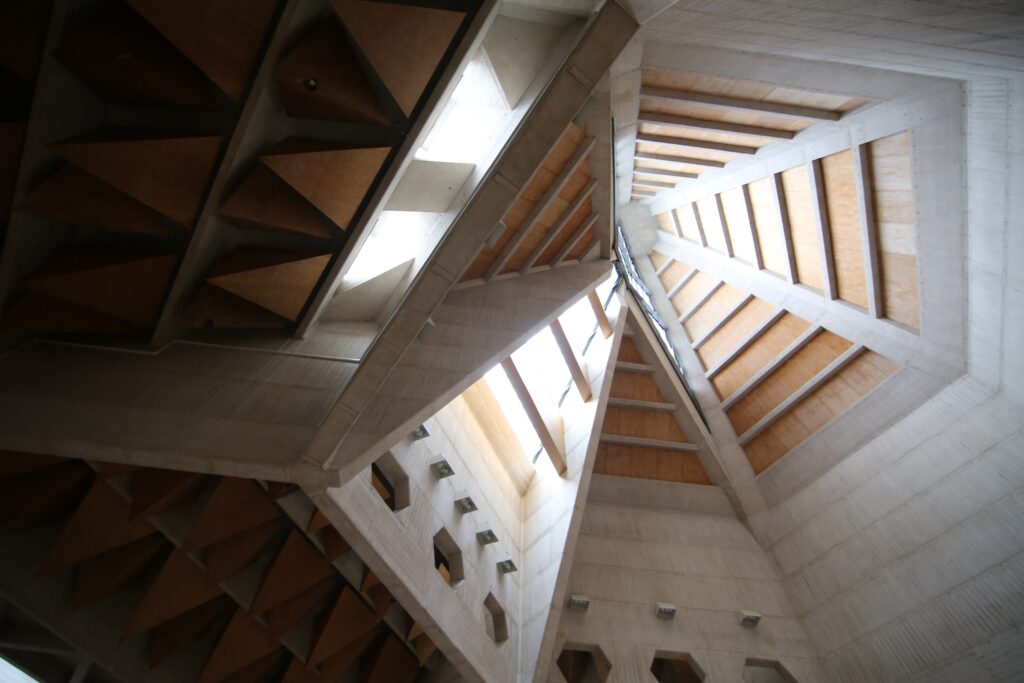
Mangotsfield Folly presents a compact yet expressive spatial organization that capitalizes on its hillside setting. The plan is deliberately vertical, with a sequence of levels stepping upward to provide changing vantage points as visitors progress. A central staircase serves as the structural spine, linking ground access to light-filled terraces without interrupting the masonry envelope. Each level is defined by a combination of stone walls and timber infill, creating a rhythm that alternates between enclosed moments and open sky views. The silhouette is anchored by a roofline that sweeps gently against the horizon, so the building asserts itself while remaining unobtrusive within the landscape.
Circulation is legible but varied, inviting slow exploration of viewpoints, inscriptions, and transitional spaces. The load path follows traditional masonry logic where gravity is carried through thick walls while the timber bays carry lighter, lateral loads and provide flexibility against movement. Openings are positioned to frame long-distance vistas and to capture prevailing winds, contributing to the Folly’s sensory experience. The foundations sit on a compact bed of brick and rubble, designed to accommodate minor ground movement without compromising the elevations. In restoration terms, the approach has been to retain original joinery and the overall material palette, while introducing compatible interventions for water management and accessibility.
Overall, the structural layout embodies a synthesis of resilience and curiosity: a sturdy core that outwardly expresses a delicate balance between mass and light, function and ornament, continuity and change.
Contemporary assessments emphasize reversibility and documentation, ensuring that future researchers can trace the evolution of the Folly’s structure without erasing its early character or later adaptations.
Decorative Elements and Symbolism
Decorative elements on Mangotsfield Folly are intentionally restrained, yet they carry symbolic weight. Simple mouldings, cornices, and carefully weathered joint details create a sense of craft that is evident from ground to parapet. Openings are framed with shallow arched or rectangular margins that emphasize light and texture rather than ostentation.
Motifs draw on local folklore and the landscape: geometric patterns echo field tiling, while botanical references nod to nearby woodland elements and seasonal cycles. Even the materials themselves—weathered stone, pale lime wash, and smoky timber—read as a visual narrative about place, memory, and the passage of time.
Visitors and researchers alike note how these decorative accents reinforce the Folly’s function as a cultural marker: a place where stories are framed by architecture, rather than merely a shelter.
The symbolic program also encourages interpretation through education and tourism, inviting discussion about local identity, heritage preservation, and the enduring value of craft-based design.
In restoration practice, attention to detailing—such as chamfer stops, tool marks, and the patina of lime wash—helps articulate the passage of time while ensuring modern durability. These details collectively communicate a narrative of community memory, where the Folly serves as a canvas for telling Mangotsfield’s stories across generations.

Benefits, Visitor Experience, and Comparative Value
Mangotsfield Folly stands as a living landmark that encapsulates the village’s evolving identity, merging centuries of historical curiosity with a surprising breadth of architectural detailing, from coarse stone textures to the rhythm of openings that catch the eye from multiple angles.
This section examines tangible benefits to the local economy and community life, the visitor experience, and how Mangotsfield Folly compares with other nearby heritage sites in terms of accessibility, visibility, investment in maintenance, and the resonance of its symbolism.
Visitors gain cultural insight through carefully produced interpretive materials, guided walks, and staged events that celebrate the folly’s historical context and design language, while offering chances to engage with folklore, conservation narratives, and the practical challenges of preserving such structures.
The site supports local tourism by offering photo opportunities, educational outreach, community gatherings, and partnerships with schools, museums, and voluntary groups that collectively raise awareness, encourage stewardship, and connect Mangotsfield Folly to broader discussions about heritage and place.
Understanding its benefits and comparative value helps stakeholders prioritize preservation investments, interpretation quality, and sustainable visitor management, ensuring that the folly remains a catalyst for learning, pride, and shared memory rather than a solitary monument.
Visitor Experience and Interpretation
The visitor experience at Mangotsfield Folly is designed to reveal multiple layers of meaning through a carefully coordinated approach that blends wayfinding, gentle landscaping, interpretive design, and broad public programming, inviting curiosity without overwhelming first-time guests, while intentionally guiding diverse audiences—families with children, casual walkers, students, history enthusiasts, and researchers—toward progressively deeper engagement with the site and its stories.
The route uses deliberate sightlines to frame architectural cues, integrates audio clips hidden in the landscape, and employs seasonal scent installations that connect memory with material form.
- Guided tours led by trained volunteers illuminate the folly’s construction phases, revealing masons’ marks, weathering patterns, and the relationship between the structure and the surrounding landscape, while stories about site workers enrich interpretation.
- Self-guided routes supported by accessible maps, QR codes, and tactile features empower visitors to explore at their own pace while absorbing historical context.
- Interpretive panels connect the folly to broader historical themes, including local industry, landscape design, and the cultural symbolism embedded in decorative motifs.
- On-site information points provide staff contact details and accessibility guidance, helping visitors request translations, large-print materials, or quiet spaces for reflection.
- Seasonal events, such as heritage days and twilight talks, extend engagement beyond ordinary visits, linking the folly to living history through performance and displays.
- Educational partnerships with local schools and colleges enrich curricula, inviting students to document architectural details, photograph textures, and compare historic design with modern restoration.
- Visitor feedback channels and social media groups capture impressions, inform improvements, and celebrate community memories linked to the folly’s place in local folklore.
This structured approach enables visitors to reinterpret the folly through different lenses—historical, architectural, environmental, and cultural—while remaining anchored to credible sources and the landscape context.
As audiences evolve, the interpretive program may expand to multilingual materials, tactile guides, and community-led storytelling that preserves accuracy and invites ongoing dialogue about heritage stewardship.
Educational and Community Benefits
Mangotsfield Folly serves as a dynamic learning resource for students of history, architecture, geography, and heritage management. Guided visits align with curriculum standards and offer opportunities to study vernacular masonry, construction sequencing, and the role of follies within 18th and 19th century landscape design—connecting to broader themes such as patronage, regional pride, and the evolving meanings of public monuments.
The educational value extends beyond the classroom through after school programs, summer archaeology days, and volunteer docent training, which cultivate critical thinking, collaboration, and competence in interpreting complex built environments. The site also hosts regular lectures, workshops, and micro-residencies that allow local researchers, artists, and planners to explore site-specific questions and present interim findings to the community.
Community outreach amplifies impact by inviting residents to contribute stories, oral histories, and memory maps that preserve local folklore and ensure that a diverse range of voices informs the official narrative. Partnerships with libraries, museums, and local archives expand access to archival resources and encourage citizen scholarship through digitization projects, transcription days, and crowd-sourced research.
Educational programming connects with local businesses and cultural organizations to create internships, field-based experiences, and collaborative exhibitions that link heritage to contemporary creative practice, while safeguarding the folly’s material integrity through careful conservation guidelines and risk assessment protocols. The long-term aim is to build enduring capacity within the community to steward the site and to share its learning with a wider audience through online archives, virtual tours, and outreach to underserved groups.
In sum, Mangotsfield Folly acts as a civic classroom, economic driver, and cultural stage that fosters inclusivity, curiosity, and lifelong learning, with ongoing evaluation guiding refinement to keep pace with changing educational needs and community priorities.
Comparative Value to Other Local Landmarks
The table below compares Mangotsfield Folly with nearby landmarks across accessibility, architectural features, interpretive amenities, and visitor engagement, offering a practical lens for planning, programming, and collaborative promotion across sites.
| Feature | Mangotsfield Folly | Nearby Landmark A | Nearby Landmark B | Significance |
|---|---|---|---|---|
| Accessibility | Road access with parking nearby; flat or gently inclined paths; some wheelchair-friendly routes. | Town-center location; stairs to entrances; limited parking; uneven surfaces. | Riverside location with public transport access; some restricted paths. | Moderate to high public reach; ongoing improvements. |
| Architectural features | Nineteenth-century limestone rubble, stepped silhouette, decorative masonry. | Victorian brick gatehouse with ornate ironwork. | Gothic revival church tower with buttresses. | Distinctive vernacular styling contributing to regional character. |
| Interpretive amenities | Panels, QR codes, and guided materials; on-site staff support. | Traditional museum displays and digital guides. | Interactive trails and seasonal displays. | High educational value with strong audience appeal. |
| Annual visitation | ≈12,000–18,000 | ≈25,000–35,000 | ≈10,000–15,000 | High connectivity and proximity influence numbers. |
This snapshot highlights strengths to leverage in interpretation, accessibility, and joint programming, while identifying opportunities for collaboration among sites to broaden reach and share resources.
Readers can use it to plan visits, coordinate school trips, and design cross-site educational activities that maximize learning outcomes and community involvement.

Offers, Accessibility, and Availability
Mangotsfield Folly welcomes visitors and researchers to explore its history, architecture, and cultural significance. This section outlines how to reach the site, when it is open, and the services that help you plan a meaningful visit. It also highlights accessibility considerations, community programs, and opportunities for education and tourism linked to the folly. From transport links to guided tours and event hire, the Folly remains a valued local landmark reflecting heritage and design values. The information here aims to balance practical access with the cultural storytelling around Mangotsfield Folly.
Visitor Access and Transport
Mangotsfield Folly is accessed from the village edge via a quiet lane that threads between hedgerows and farmland, making it a calm destination for day trips and research visits. For visitors arriving by road, the approach is straightforward from the main routes into Mangotsfield, with signposted turning points guiding you toward the site entrance. A short, level path from the car park leads to the folly, reducing the effort needed to reach the viewing area and ensuring a pleasant arrival for families and older visitors. On busy event days, staff and volunteers help manage traffic flow to keep the area safe and accessible while preserving the tranquil character of the surrounding countryside. The site offers a small lay-by near the entrance for short drops-off and quick parking, with several municipal spaces within a ten-minute walk. Public transport: local bus services connect Mangotsfield with nearby towns and with city centers, and many visitors combine a bus ride with a walk or a short taxi transfer to the site. The nearest rail stations are within a reasonable travel time by bus or taxi, and timetables are subject to seasonal changes, so checking current schedules is recommended. For cyclists and pedestrians, signposted routes pass through quiet lanes and countryside paths that lead directly to the folly, and a secure bike rack is available at the entrance. The site is not fully vehicle-accessible for large coaches, but arranged groups can be guided to a convenient pickup point close to the entrance. If you require specific accessibility arrangements, contact the visitor desk in advance so staff can plan a suitable arrival route. If arriving with a group, consider coordinating with a driver or public transport operator to allow a brief drop-off and pickup at the roadside.
Opening Times and Availability
Opening hours for Mangotsfield Folly are published in advance and can shift with the seasons, events, and weather. The site is generally open on weekends and during school holidays, with additional weekday slots available for groups and educational visits when staff are on duty. Regular public hours commonly run from mid-morning to late afternoon, but visitors are advised to check the official site or contact the visitor desk for the latest timetable. Special exhibitions, talks, and tours may extend or modify opening times, particularly during open days or heritage events. When a private event is scheduled, access to certain areas may be limited; the management team coordinates with attendees to minimize disruption. Tickets and admission are typically free for local residents with a suggested donation for upkeep, though pricing can vary for larger groups or special programs.
Seasonal Variations
In spring and summer, longer daylight hours and milder weather make guided tours more frequent, and staffing often expands to accommodate public demand. Autumn and early winter bring cooler temperatures and more variable conditions, with some days better suited to indoor displays or self-guided trails. During peak periods such as school holidays or heritage festivals, opening hours may extend and additional volunteer guides may be available, while severe weather can prompt temporary closures for safety. Signage at the entrance shows current hours and any access restrictions, and a recorded message can outline updates when the site is closed or partially accessible. Visitors are advised to prepare for changing weather and to bring appropriate clothing and footwear for outdoor exploration.
Private Bookings and Events
The Folly accommodates private bookings and events by arrangement. To inquire, use the official booking form on the site or contact the events team at least two weeks in advance. Availability depends on the calendar and staff coverage, and organizers may need to follow safety and accessibility guidelines. Private bookings typically include a guided briefing with a historian, optional off-site talks, and a self-guided trail for students or families. Fees reflect conservation costs and staffing, with favorable terms for educational or community groups and limited weekend slots to balance public access with preservation.
Events, Tours, and Booking Options
Mangotsfield Folly hosts a calendar of events that blends heritage talks, architectural tours, and themed open days. Scheduled events may include expert lectures on the folly’s design and construction, special exhibitions about local folklore, and guided walks that highlight the surrounding landscape and historical context. Tours are offered in guided formats led by trained volunteers and professional staff, as well as self-guided trails with printed maps or digital resources for independent visitors. Booking options are flexible: individuals can join public tours on a walk-in basis where space allows, while groups of six or more should book in advance to secure a time slot. School and university visits can be arranged through the education team, often with a tailored program that aligns with local curricula. Accessibility and inclusions are integrated into each program, with clear routes, rest areas, and assistance available on request. Prices for public programs are modest or donations-based, while private tours and talks follow a standard fee schedule. To reserve a place, use the online form, call the premises, or email the bookings office; cancellation policies are published on the site.
Accessibility for Disabled Visitors
Mangotsfield Folly is committed to welcoming visitors with mobility, visual, or hearing impairments. The site features a predominantly level approach to the main viewing area, with ramped access at the entrance and clearly marked routes that avoid the steepest sections where possible. A combination of smooth paths and compact gravel surfaces makes circulation feasible for wheelchairs and walkers, though some historic sections retain uneven or cobbled surfaces that require care. Seating points and rest areas are distributed along the routes, and there is an accessible viewing bench at key vantage points. An accessible toilet and baby-changing facilities are available near the main entrance, and staff can assist with large-print maps or audio descriptions upon request. Assistance animals are welcome, and staff are trained to provide practical support, such as guiding or pacing tours to meet individual needs. Visitors with sensory or other accessibility requirements are encouraged to contact the visitor desk ahead of their arrival to arrange a suitable visit plan and to confirm any limitations on access due to ongoing conservation work.